

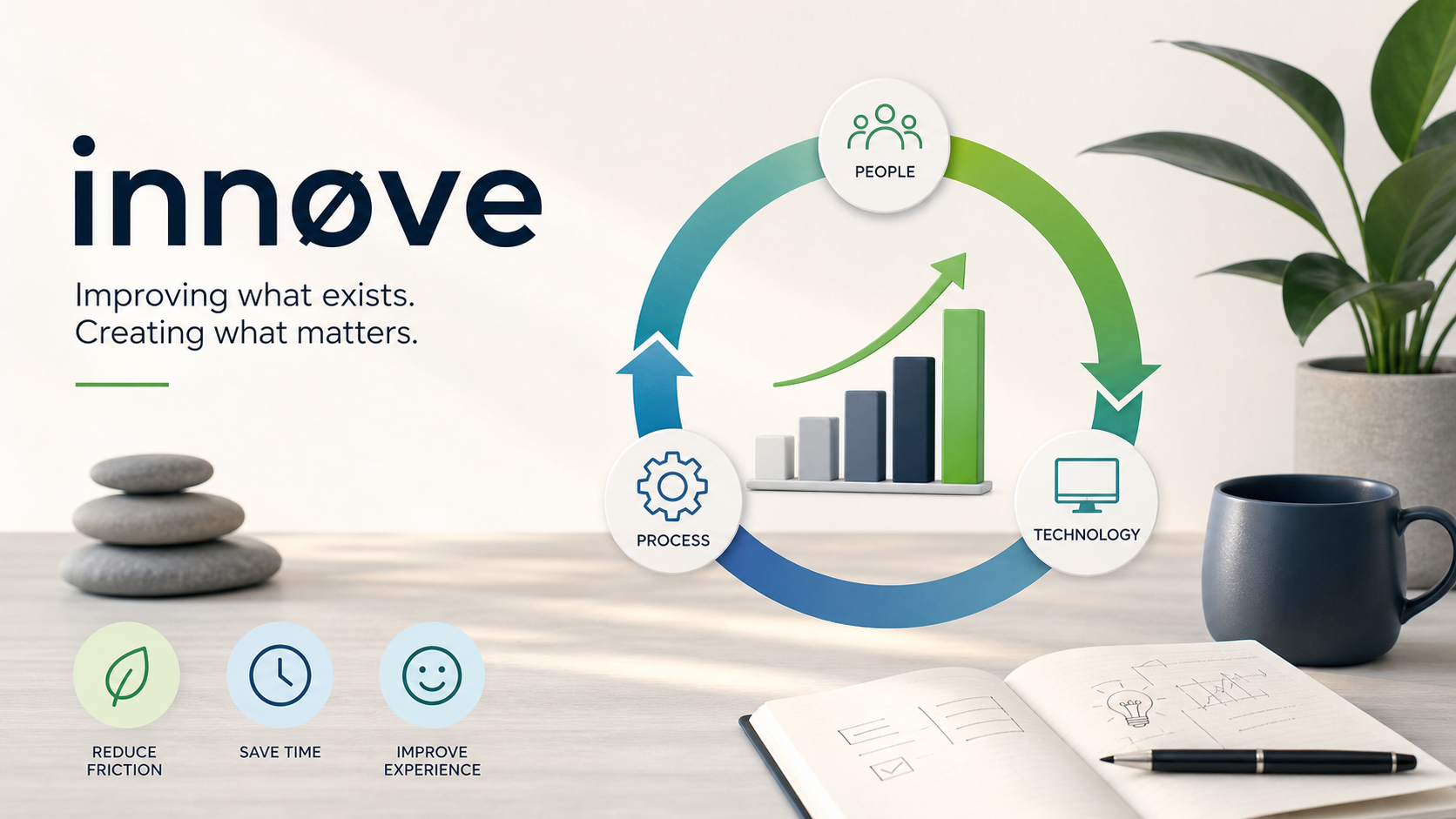
If you’ve come across the term innøve, you might be wondering whether it’s a brand, a concept, or just another modern buzzword floating around online. On the surface, it can feel vague. But when you look closer, innøve starts to make more sense as a way of thinking rather than a fixed definition.
It’s less about a single idea and more about how improvements actually happen in real life—quietly, gradually, and often without much attention.
What innøve Actually Means
At its core, innøve is about improving something that already exists in a meaningful way.
Not reinventing the wheel. Not chasing something completely new for the sake of it. Instead, innøve focuses on refinement—making systems, ideas, or processes work better than before.
That might sound simple, but it’s surprisingly powerful when applied consistently.
For example:
- Improving how a team communicates instead of adding more tools
- Making a product easier to use instead of adding more features
- Finding a faster way to complete a task without changing the outcome
Innøve is essentially about asking: “How can this be done better?” rather than “What can I create from scratch?”
That small shift in mindset changes everything.
Why innøve Matters More Than Ever
We live in a time where almost everything already exists. There are apps for everything, systems for everything, and endless content competing for attention.
Because of that, the real challenge is no longer invention—it’s improvement.
This is where innøve becomes important.
Instead of building something entirely new, people are now focused on:
- Reducing friction in everyday processes
- Making digital tools more intuitive
- Cutting unnecessary complexity from workflows
In many cases, the most successful improvements are not visible at first glance. They feel small, but they save time, reduce stress, and make systems more usable.
That’s the quiet power of innøve—it doesn’t always look impressive, but it feels impactful.
How innøve Shows Up in Real Life
1. In Work and Business
In professional environments, innøve often appears in subtle but meaningful ways.
For example:
- A company streamlining onboarding so new employees don’t feel lost
- A team replacing long email threads with structured communication tools
- A business removing unnecessary approval steps to speed up decision-making
None of these changes sound revolutionary. But together, they can dramatically improve efficiency.
What’s interesting is that many organizations overlook these small improvements because they’re not flashy. Yet in practice, these are the changes that actually save time and reduce frustration.
2. In Personal Productivity
Innøve isn’t limited to companies or tech teams. It shows up in everyday personal habits too.
Think about:
- Organizing your tasks in a way that reduces mental clutter
- Setting up routines that eliminate decision fatigue
- Using simple tools more effectively instead of constantly switching between new ones
A common mistake people make is believing productivity comes from doing more. In reality, innøve is about doing things more smoothly.
For example, instead of downloading five different apps to stay organized, someone practicing innøve might refine a single system until it works effortlessly.
3. In Technology and Design
If you look closely at good digital products, you’ll notice innøve everywhere.
It shows up in:
- Faster loading times
- Cleaner interfaces
- Fewer steps to complete actions
- Better accessibility for different users
These improvements might not always be visible, but they change how people feel when using a product.
A well-designed app doesn’t overwhelm you. It quietly removes obstacles. That’s innøve in action—less about adding and more about refining.
Common Mistakes People Make with innøve
While the idea sounds simple, it’s often misunderstood.
Mistake 1: Confusing innøve with invention
One of the biggest misunderstandings is thinking innøve means creating something entirely new.
In reality, innøve is usually the opposite. It’s about improving what already exists. When people chase novelty instead of usefulness, they often end up with complicated solutions that don’t solve real problems.
Mistake 2: Overcomplicating improvements
Another common issue is adding too many layers of “improvement” at once.
Instead of making something simpler, they make it more complex:
- More features
- More steps
- More rules
True innøve usually goes in the opposite direction. It removes friction instead of adding structure.
Mistake 3: Ignoring real user experience
It’s easy to improve something on paper but miss how it feels in practice.
A system might look efficient, but if it’s confusing or tiring to use, then it hasn’t truly improved. Innøve always comes back to real-world experience, not just design logic.
The Real Value of innøve
The most important thing to understand is that innøve is not about big, dramatic change. It’s about consistent, thoughtful refinement.
Over time, small improvements compound:
- A process becomes faster
- A tool becomes easier to use
- A habit becomes more natural
None of these changes feel huge individually, but together they create noticeable progress.
That’s why innøve matters—it encourages you to focus on what actually works, not just what looks impressive.
Final Thoughts
At its heart, innøve is a practical mindset. It reminds us that progress doesn’t always come from starting over. Sometimes, it comes from paying closer attention to what already exists and asking how it can work better.
Whether you apply it in work, personal habits, or technology, the idea stays the same: improve with intention, not noise.
And often, that’s where the real progress begins.