

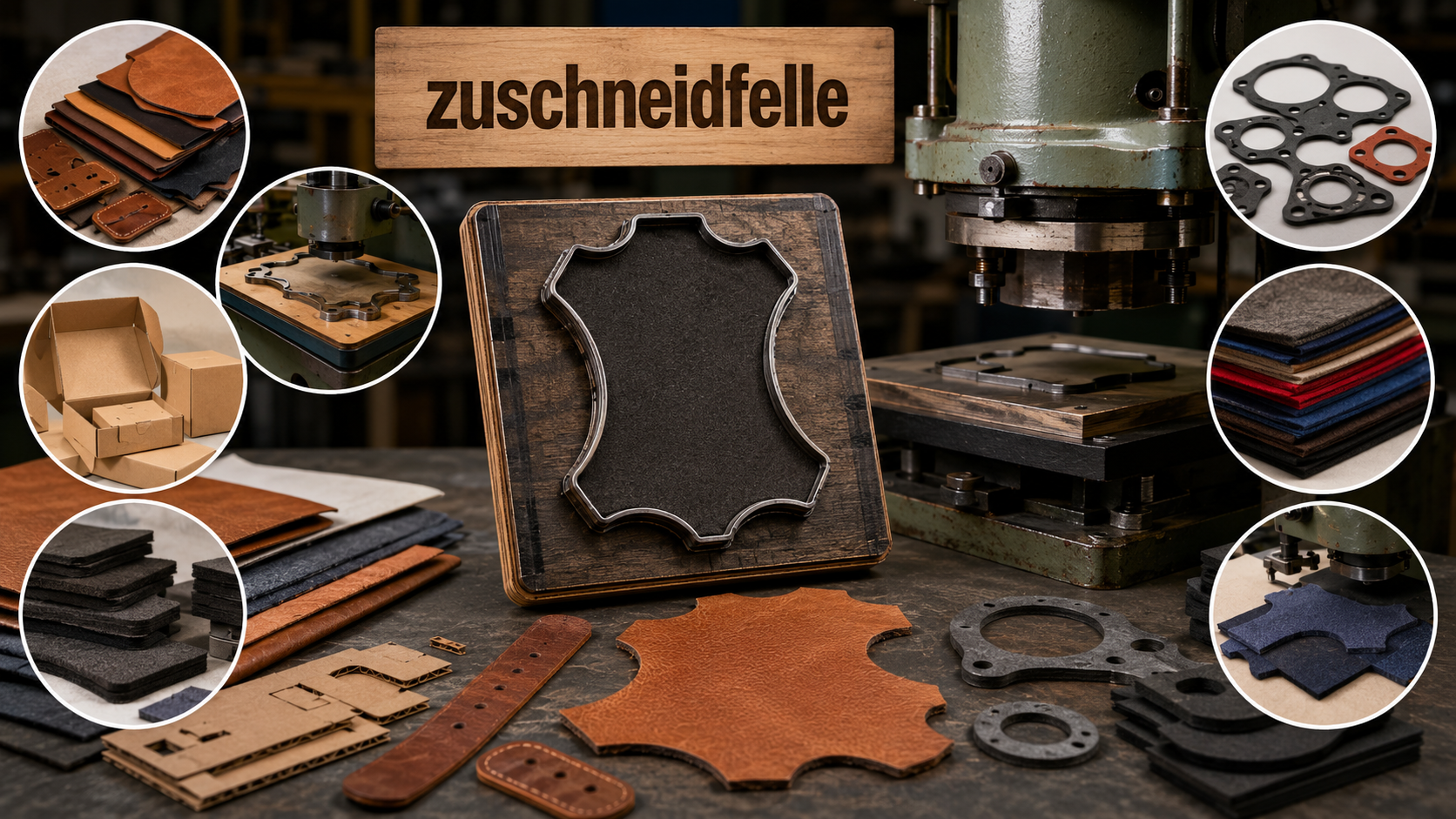
Zuschneidfelle sounds niche. It is. But if you’ve ever held a perfectly cut leather strap, a gasket that fits on the first try, or a stack of identical cardboard shapes, you’ve seen the result.
A Zuschneidfelle is a cutting die. Think of it as a hardened tool that presses through material and stamps out a shape with repeatable precision. Simple idea. Serious impact.
what a zuschneidfelle actually does
It cuts shapes fast, over and over, without drift.
A press drives the die into the material. The edge does the work. The backing surface takes the hit. Out comes a part that matches the last one within tight tolerances.
That consistency is the whole point. You don’t measure each piece. You trust the tool.
where you’ll find them
Leather shops use them daily. Belts, watch straps, wallet panels. One press, one clean edge.
Packaging lines rely on them for boxes, inserts, labels. If you’ve unboxed anything with crisp folds and tabs, a die was involved.
Automotive plants use them for gaskets, insulation pads, trim pieces. The parts need to fit without fuss. Dies make that happen.
Textiles too. Patterns for garments, foam inserts, felt pads. Anywhere you need the same shape again and again.
the anatomy of a good die
At a glance, it looks like a frame with a sharp outline. Up close, details matter.
Cutting edge. Usually steel, ground to a fine bevel. The angle depends on the material. Soft leather tolerates a different edge than dense rubber.
Body. Plywood or steel base that holds the rule in place. It keeps the shape stable under pressure.
Ejection and support. Foam or rubber inside the outline helps release the cut piece. Without it, parts stick and slow you down.
Tolerance. The distance between nominal size and actual cut. Tight tolerance means less trimming later.
Get these right and the die feels invisible. It just works.
steel rule vs solid dies
You’ll hear two types a lot.
Steel rule dies. Thin steel strips bent into shape and set into a base. They’re quick to make and cost less. Great for packaging, foam, and many leather jobs.
Solid dies. Machined from a single block. Heavier, pricier, and built for long runs or tougher materials. Think rubber gaskets or thick composites.
Choice comes down to volume, material, and budget. Small runs lean steel rule. High volume with hard stock leans solid.
materials you can cut
Leather is the classic. Vegetable-tanned, chrome-tanned, different thicknesses. Each asks for a slightly different edge and pressure.
Cardboard and paperboard are forgiving. You can run fast and keep edges clean.
Rubber and plastics push back more. You’ll need a sturdier die and a press that can deliver consistent force.
Foam is soft but tricky. It compresses. Ejection foam inside the die helps keep cuts crisp.
Fabrics vary. Woven, non-woven, laminated layers. Stack cutting can speed things up if the die is dialed in.
presses that pair with zuschneidfelle
The die is half the story. The press finishes it.
Clicker press. Common in leather shops. You place the die, position the material, and hit a lever or button. Good control, moderate speed.
Hydraulic press. More force, more consistency. Useful for thicker or denser materials.
Swing-arm press. The head swings over the die. Flexible for different sizes and quick repositioning.
Traveling head press. For larger sheets and higher throughput. The head moves across a table, repeating the cut pattern.
Pick a press that matches your material and your daily volume. Too little force leads to ragged edges. Too much force chews up your cutting surface.
setting up for clean cuts
Small choices add up.
Use a proper cutting pad. Polyethylene boards are common. They protect the die and keep the edge from dulling too fast.
Align the grain. Leather has direction. Cutting across or along it changes stretch and edge finish.
Mind the stack height. Cutting multiple layers saves time, but go too thick and the bottom layer suffers.
Check pressure evenly across the die. Uneven pressure shows up as partial cuts on one side.
And keep the surface clean. Dust and scraps under the die create high spots. That’s how you get inconsistent cuts.
maintenance that actually matters
Dull edges creep up on you. The cut still happens, but the edge gets fuzzy, pressure goes up, and parts start to vary.
Sharpening is part of the cycle. Some shops send dies out. Others handle light honing in-house. Don’t wait until quality drops.
Store dies dry. Rust on the edge ruins your next run.
Inspect the foam. If it’s compressed or torn, replace it. Ejection matters more than people think.
Rotate your cutting pad. Move the work area around so you don’t carve grooves in one spot.
cost and lead time
A basic steel rule die can be ready in days. Complex shapes or tight tolerances take longer.
Prices vary with size, material, and complexity. Simple shapes stay affordable. Intricate designs with many curves and internal cuts cost more.
The math is simple. The die pays for itself when you stop hand cutting. Time saved per piece adds up fast.
design tips for better dies
Keep corners realistic. Extremely tight inside corners are hard to cut cleanly and can weaken the die.
Add bridges if the shape has islands. They hold parts together during cutting and prevent pieces from falling out in the press.
Plan for grain and stretch if you’re working with leather. A small rotation of the pattern can improve durability.
Label your dies. Sounds obvious. In a busy shop, it saves minutes that turn into hours over a week.
when not to use a die
Short runs with frequent design changes can favor a knife or a digital cutter.
Very thick or abrasive materials might wear a die too quickly to make sense.
Highly detailed, one-off shapes sometimes fit better with CNC or laser methods.
Use the tool that fits the job. Dies shine when repetition is the goal.
the feel of a good setup
You know it when you see it.
The press comes down. There’s a firm, even contact. No crunching, no hesitation. The die lifts, and the piece drops free with a clean edge.
Stack them up. They match. No trimming, no second pass.
That’s the quiet appeal of Zuschneidfelle. It turns cutting into a repeatable action you don’t have to think about.
a quick example from a leather bench
A small shop making 50 belts a day switches from hand cutting straps to a steel rule die.
Before, each strap took 2 minutes to mark and cut. Edges varied. Some needed sanding.
After, each strap takes 10 seconds to cut. Edges come out clean. Sanding drops to near zero.
Over a week, that’s hours saved and a tighter product. The die didn’t change the design. It changed the pace and the consistency.
choosing your first zuschneidfelle
Start with your most repeated part. The one you cut every day.
Keep the design simple. Test it. Adjust if needed.
Pair it with a reliable cutting pad and a press that can deliver even pressure.
Run a small batch. Check edges, dimensions, and release. Tweak, then scale.
You’ll feel the difference on day one.
closing thought
Zuschneidfelle won’t get much attention. They sit on a shelf until you need them.
But when you do, they turn a messy, variable task into something steady. Press, lift, done.
That’s the kind of tool you keep around.