
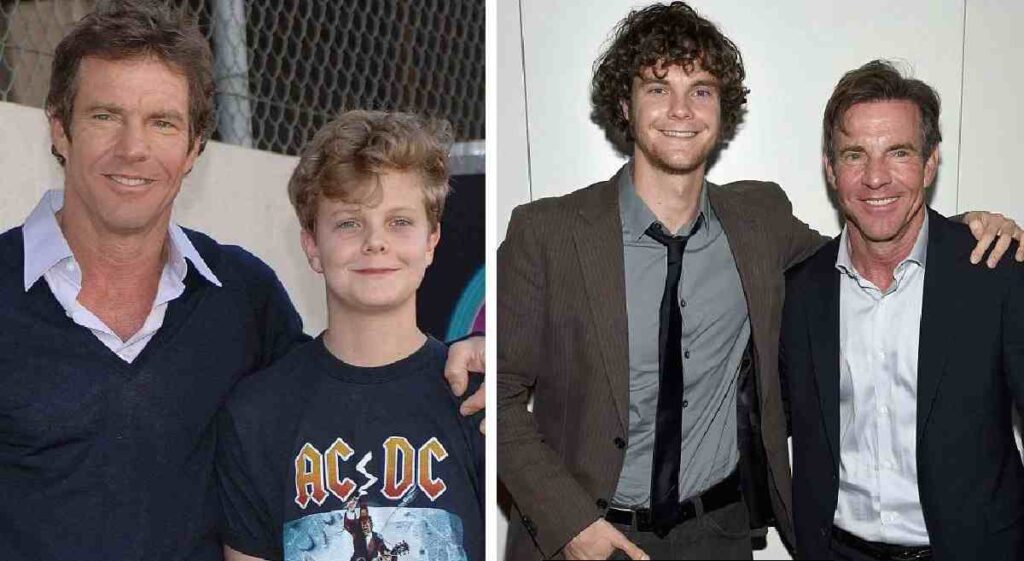
When people search for Thomas Boone Quaid, they’re usually curious about one thing: what it’s like to grow up as the child of a Hollywood actor—and why we don’t hear much about him.
Unlike many celebrity kids who are constantly in the public eye, Thomas Boone Quaid has lived a relatively private life. That alone makes his story interesting. It’s not about fame or headlines—it’s about how some families intentionally choose a quieter path.
Let’s take a closer look at who he is, his background, and what makes his story different from what most people expect.
Who Is Thomas Boone Quaid?
Thomas Boone Quaid was born on November 8, 2007. He is the son of actor Dennis Quaid and real estate agent Kimberly Buffington.
He has a twin sister, Zoe Grace Quaid, and the two were born via gestational surrogate—a detail that gained public attention at the time.
From the outside, his life might seem like it would naturally revolve around Hollywood. But that hasn’t really been the case.
A Life That Started with Unexpected Challenges
Shortly after their birth, Thomas and his twin sister faced a serious medical situation that became widely reported.
At just a few days old, both babies were accidentally given a large overdose of heparin, a blood-thinning medication, at the hospital. It was a life-threatening incident and understandably a terrifying experience for their family.
What followed is something many people don’t realize: Dennis Quaid became an active advocate for patient safety after this event. He even worked on raising awareness about preventable medical errors.
Why this matters
This part of Thomas Boone Quaid’s story is important because it shaped how his family approached public life afterward. Instead of chasing attention, they became more protective and intentional.
It also shows that even people with resources and access can face serious healthcare mistakes—a reality many families can relate to.
Growing Up Away from Hollywood Noise
One of the most noticeable things about Thomas Boone Quaid is how little we see of him.
That’s not accidental.
His parents made a conscious effort to keep him and his sister out of the constant spotlight. This is quite different from many celebrity families who regularly share their children’s lives publicly.
What this looks like in practice
- Few public appearances
- Limited media exposure
- Minimal social media presence
- Focus on normal childhood experiences
This approach reflects a broader trend among some celebrities who want their children to grow up without the pressure of public scrutiny.
Why Privacy Matters More Than Fame
It’s easy to assume that being connected to fame automatically means a glamorous, public lifestyle. But in reality, many celebrity parents actively try to avoid that for their kids.
Thomas Boone Quaid is a good example of why.
Practical insight: the pressure of visibility
Kids growing up in the public eye often deal with:
- Constant judgment from strangers
- Lack of personal boundaries
- Pressure to meet expectations tied to their parents
- Early exposure to social media criticism
By keeping Thomas largely out of that environment, his parents likely gave him space to develop his identity without outside noise.
Common Misconceptions About Celebrity Kids
When people search for Thomas Boone Quaid, they often expect to find a rising actor, influencer, or public figure.
That expectation itself is a misconception.
Reality vs. expectation
Expectation:
He must be following in his father’s footsteps.
Reality:
There’s no confirmed indication that he’s pursuing acting or entertainment.
Expectation:
He’s constantly in the media.
Reality:
He’s rarely seen publicly.
Expectation:
Celebrity kids live extraordinary, visible lives.
Reality:
Some live intentionally ordinary lives—with structure, school, and privacy.
This gap between expectation and reality is important to understand. Not every celebrity child becomes part of the entertainment world.
Pros and Cons of Growing Up in a Famous Family
Even with a private upbringing, being part of a well-known family still comes with unique advantages and challenges.
Advantages
- Access to strong education and resources
- Exposure to diverse experiences
- Financial stability
- Opportunities if he chooses a public career later
Challenges
- Public curiosity that never fully goes away
- Pressure tied to family reputation
- Difficulty maintaining complete anonymity
- Expectations (spoken or unspoken)
Thomas Boone Quaid’s upbringing seems to lean toward maximizing the benefits while minimizing the downsides—especially the visibility factor.
A Subtle but Important Lesson
There’s something quietly valuable in how Thomas Boone Quaid’s life has been handled.
In a culture that often rewards constant exposure, his story shows that stepping back can actually be a deliberate and healthy choice.
A real-world takeaway
Not everything has to be public to be meaningful.
Whether someone is a celebrity child or not, the idea of protecting personal space is becoming more relevant—especially in a world driven by sharing and visibility.
What the Future Might Hold
Because Thomas Boone Quaid lives such a private life, there’s very little confirmed information about his interests, education, or future plans.
And honestly, that’s part of the point.
He has the freedom to choose his own path without public pressure pushing him in one direction or another.
Possible paths (without speculation)
- He could enter the entertainment industry later
- He might pursue a completely different career
- He may continue to live privately, even as an adult
What’s important is that the decision appears to be his—not something shaped by outside expectations.
Final Thoughts
Thomas Boone Quaid isn’t famous for what he’s done publicly—and that’s exactly what makes his story worth paying attention to.
His life highlights something people don’t always consider: fame doesn’t have to define the next generation.
Instead of growing up in constant spotlight, he’s had the chance to experience something closer to normal life—something many would argue is far more valuable.
For readers, the takeaway is simple but powerful: sometimes the most interesting stories are the quiet ones, where intention matters more than attention.