
Few words carry as much cultural weight in the Dutch-speaking world as kerkt — a term rooted deeply in the traditions of faith, community, and centuries of architectural brilliance. Whether you’re a history enthusiast, a traveler exploring the Netherlands or Belgium, or simply curious about European religious culture, understanding what “kerkt” represents opens a fascinating window into a civilization shaped by devotion, craftsmanship, and communal identity.
This article explores the rich layers of meaning behind kerkt, its architectural legacy, spiritual significance, and why it continues to captivate scholars, tourists, and locals alike.
The Meaning Behind Kerkt and Its Cultural Roots
In Dutch, the verb kerken — from which kerkt is derived — relates to the act of going to or attending church. When someone “kerkt,” they participate in one of the oldest communal traditions in European culture: gathering within sacred walls to worship, reflect, and connect with something greater than themselves.
The word itself traces back to the Old Dutch and Middle Dutch traditions, sharing its etymological roots with the German Kirche and the English church, all ultimately deriving from the Greek kyriakón, meaning “the Lord’s house.” This linguistic thread connects countless communities across centuries, reminding us that the concept of a sacred gathering place is both universal and deeply personal.
In contemporary Dutch usage, kerkt appears naturally in everyday speech and religious writing, capturing the quiet rhythm of a tradition that has sustained communities through wars, social revolutions, and the passage of time. The term signals not just a physical location but an entire ecosystem of spiritual practice, moral guidance, and cultural memory.
The Architecture of Devotion: Dutch Church Buildings Through the Ages
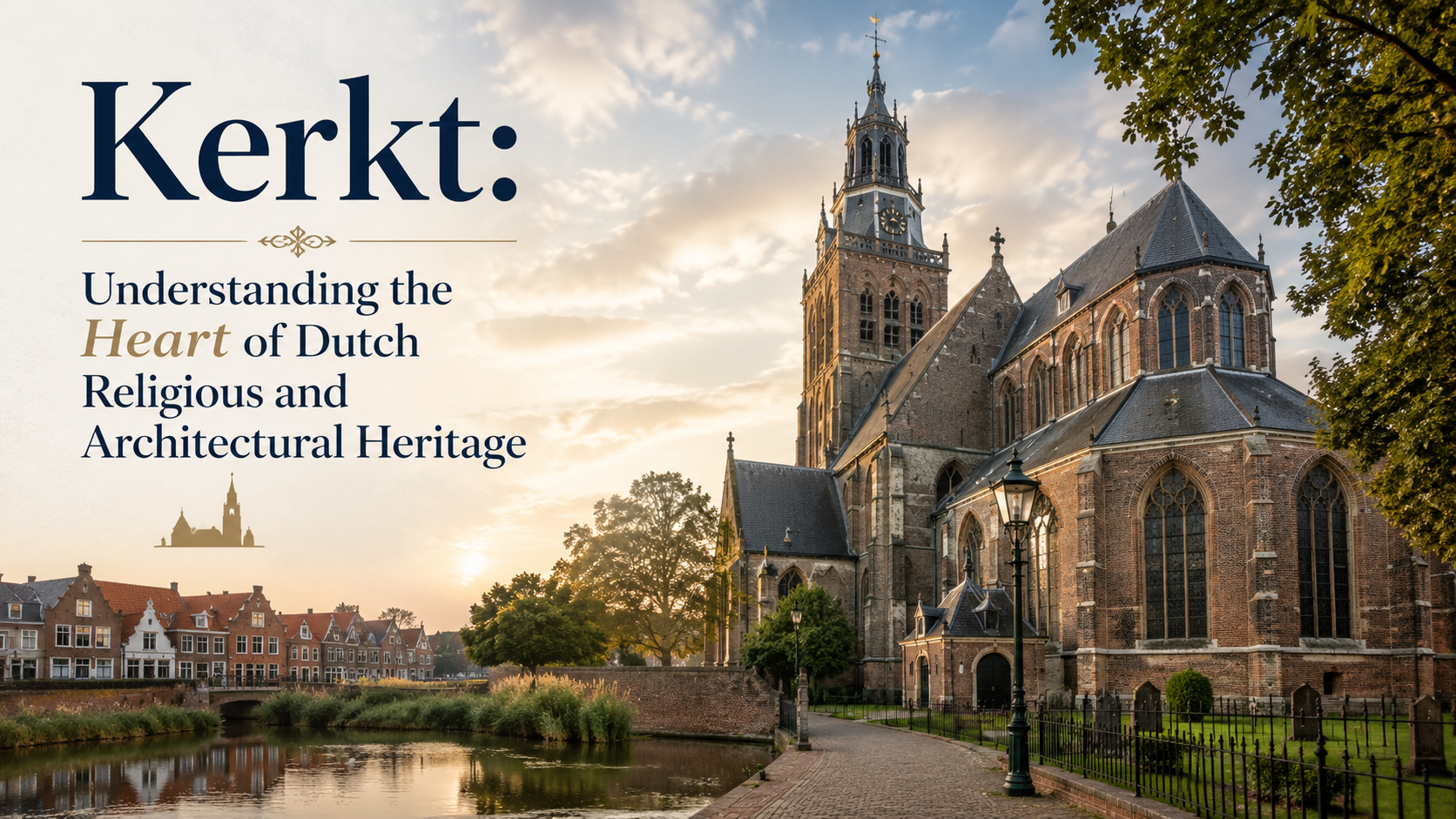
One of the most enduring expressions of Dutch religious life is its extraordinary church architecture. Across the Netherlands and Flanders, thousands of churches — kerken in Dutch — stand as monuments to centuries of artistic ambition and spiritual yearning. From towering Gothic cathedrals to modest Reformed village churches, each structure tells a story of the community that built and sustained it.
Gothic Grandeur and Medieval Mastery
The medieval period produced some of the most awe-inspiring religious architecture ever conceived. The Domkerk in Utrecht, the Sint-Bavokerk in Haarlem, and the Onze-Lieve-Vrouwekathedraal in Antwerp are breathtaking examples of Gothic engineering — soaring vaulted ceilings, intricate stone tracery, and stained glass windows that filter daylight into cascades of color.
These structures were not merely places of worship. They served as community centers, pilgrimage destinations, and symbols of civic pride. Building them required generations of skilled labor, and their presence still defines city skylines centuries later.
Reformed Simplicity and the Reformation’s Impact
The Protestant Reformation of the sixteenth century transformed the religious landscape of the Low Countries dramatically. When communities embraced Reformed theology, church interiors were stripped of ornate decoration — statues removed, altars cleared, whitewashed walls replacing colorful murals. This aesthetic shift gave birth to a distinct tradition of austere beauty that many find deeply moving in its own right.
The result was a new kind of sacred space — one focused on the spoken word, congregational singing, and direct engagement with scripture. These Reformed kerken became models of simplicity and clarity, influencing church design across northern Europe and beyond.
Community, Identity, and the Social Role of the Kerk
Beyond architecture and theology, the kerk has always functioned as the heartbeat of Dutch community life. For centuries, local churches served as schools, record-keepers of births, marriages, and deaths, and gathering places for civic decisions. The Sunday ritual of kerken bound neighborhoods together across class lines, creating shared rhythms that shaped the entire week.
Church Records and Genealogical Heritage
For historians and genealogists, Dutch church records — known as doopboeken (baptism registers), trouwboeken (marriage registers), and begraafboeken (burial registers) — are invaluable treasures. These meticulous documents, kept by generations of church administrators, provide detailed windows into family histories stretching back to the sixteenth century and earlier.
Anyone researching Dutch or Flemish ancestry inevitably encounters these archives, which are now increasingly digitized and accessible through national and regional heritage organizations. The careful preservation of these records reflects the deep respect Dutch culture has always shown for both faith and communal memory.
Festivals, Seasons, and Sacred Time
The liturgical calendar has long structured daily life in Dutch-speaking communities. From Advent and Christmas through Lent, Easter, and Pentecost, the seasons of the church year provided a framework for rest, celebration, mourning, and renewal. Even in increasingly secular Dutch society, these rhythms persist — in national holidays, family gatherings, and cultural events that trace their origins directly to religious tradition.
Kerkt Today: Faith, Tourism, and Cultural Preservation
In the twenty-first century, the relationship between Dutch society and its kerken is evolving. Church attendance has declined significantly in recent decades, leaving many historic buildings searching for new purposes. Across the Netherlands, former churches have been thoughtfully repurposed as libraries, concert halls, bookshops, restaurants, and community centers — a creative solution that preserves architectural heritage while serving contemporary needs.
At the same time, religious tourism remains a powerful force. Millions of visitors each year make pilgrimages to great Dutch and Flemish churches, drawn by their art, architecture, history, and atmosphere. The Rijksmuseum in Amsterdam, Vermeer’s Delft, and the great cathedral cities of Bruges and Ghent all owe part of their global appeal to their extraordinary ecclesiastical heritage.
Organizations dedicated to monumentenzorg — heritage preservation — work tirelessly to maintain these buildings for future generations, recognizing that they represent not only religious history but the collective cultural achievement of entire peoples.
Why Kerkt Matters in a Modern World
In an age of rapid change and digital disconnection, the concept of kerkt offers something quietly radical: a reminder that humans have always sought places of gathering, reflection, and transcendence. Whether or not one practices a formal religion, the traditions embodied in Dutch church culture — community, memory, beauty, and moral seriousness — speak to needs that remain profoundly relevant.
Studying and appreciating kerkt means engaging with one of the richest threads in Western civilization’s tapestry. It means understanding how architecture can elevate the human spirit, how community rituals shape individual identity, and how the past continues to live in the present through stone, record, and song.
The next time you encounter a Dutch village church standing quietly at the center of its town square, or read the word kerkt in a historical text or modern novel, consider the extraordinary depth of history it carries — and the generations of lives it has quietly witnessed, sheltered, and sustained.