
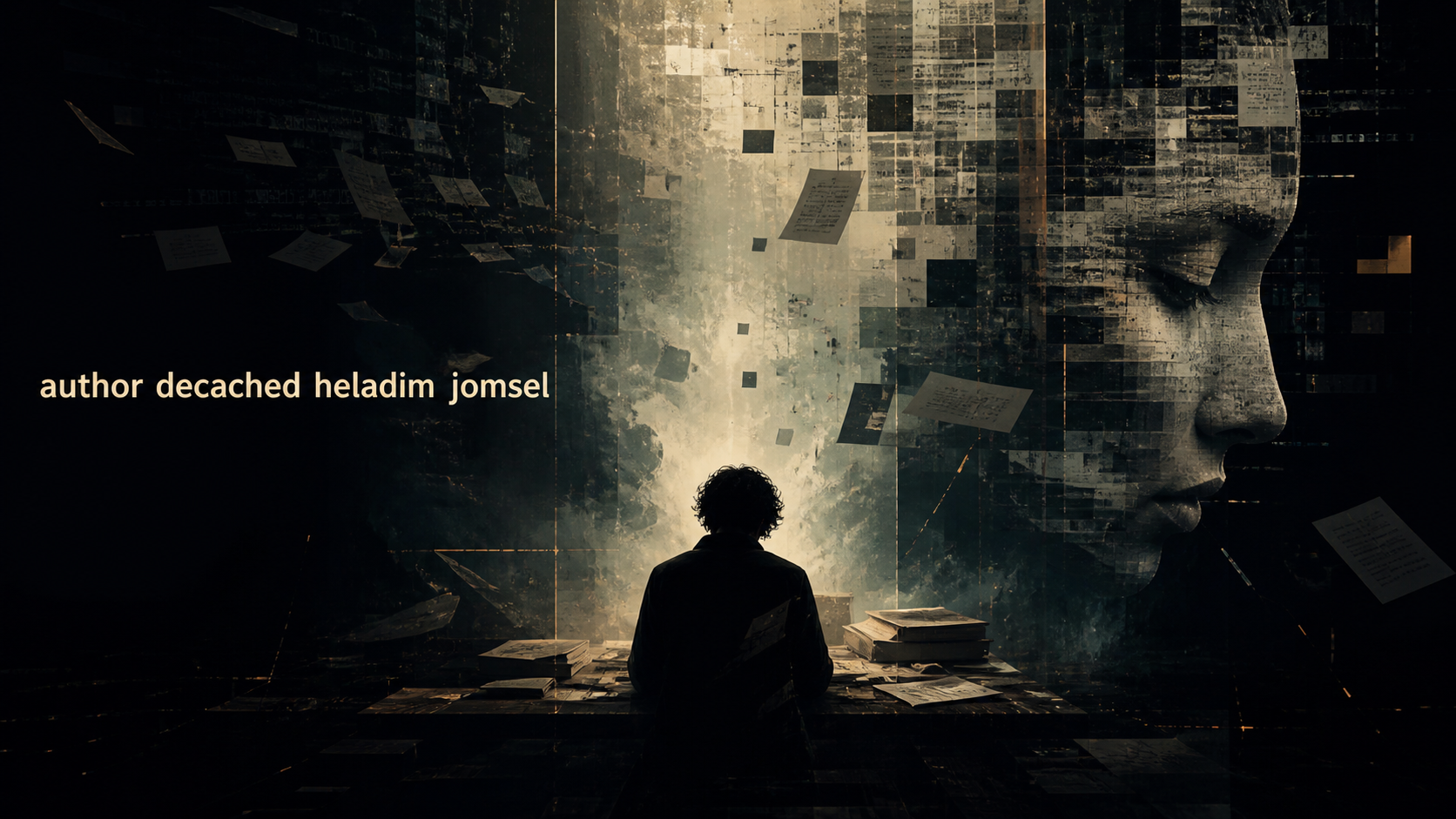
If you’ve come across the name author decached heladim jomsel, chances are you’re trying to figure out one thing: who is this, and why are people talking about their work?
That’s a fair question. Unlike mainstream authors with clearly documented backgrounds, this name tends to appear in more niche discussions—often tied to unconventional writing styles, experimental formats, or lesser-known publishing spaces.
So instead of giving you a vague overview, let’s break it down in a way that actually helps you understand what’s going on, what to expect, and whether it’s worth your attention.
Who Is author decached heladim jomsel?
At first glance, author decached heladim jomsel doesn’t fit the traditional mold of a widely recognized author. There’s limited mainstream documentation, which usually means one of three things:
- The author operates in niche or underground circles
- Their work is distributed through non-traditional platforms
- Or the name itself could be a pseudonym or digital identity
This last point matters more than most people realize. In modern writing—especially online—authors often separate identity from content. It allows them to experiment more freely without being tied to expectations.
In the case of author decached heladim jomsel, the style and presence suggest someone focused more on ideas and structure than personal branding.
What Kind of Content Is Associated With This Author?
When people search for author decached heladim jomsel, they’re usually not looking for a typical novel or blog series. Instead, the work tends to fall into a few distinct categories:
1. Experimental Writing
The content often plays with format. That might include:
- Non-linear storytelling
- Fragmented narratives
- Minimalist or abstract language
This isn’t “easy reading” in the traditional sense. You don’t just follow a plot—you interpret it.
2. Digital-First Content
There’s a strong possibility that the work is designed for digital environments rather than print. That means:
- Short-form pieces scattered across platforms
- Text that interacts with code, design, or structure
- Content that feels more like a concept than a finished product
3. Concept-Driven Themes
Instead of focusing on characters or storytelling alone, the writing often explores ideas like:
- Identity in digital spaces
- Memory and data (the “decached” concept is a big clue here)
- Disconnection and reconstruction of meaning
What Does “Decached” Even Mean in This Context?
This is where things get interesting.
In technical terms, “decached” refers to removing stored data so something loads fresh. Applied to writing, it suggests:
- Stripping away assumptions
- Rebuilding meaning from scratch
- Presenting ideas without relying on familiar structures
So when you see author decached heladim jomsel, you’re likely looking at work that intentionally avoids conventional storytelling patterns.
It’s not random—it’s deliberate.
Why People Are Searching for author decached heladim jomsel
Most searches for this keyword fall into a few clear intentions:
Curiosity After Discovery
Someone encountered the name somewhere—maybe in a forum, a niche site, or a piece of content—and wants context.
Trying to Understand the Style
Readers often want to know:
- “Is this supposed to make sense?”
- “Am I missing something?”
That’s a normal reaction. This kind of writing isn’t always straightforward.
Looking for More Work
Once someone connects with the style, they usually want to find:
- Similar pieces
- Related authors
- Or a central archive of the work
Practical Insights: How to Approach This Author’s Work
If you go in expecting a typical reading experience, you’ll probably get frustrated. Here’s a better way to approach it.
Read Slowly (and Sometimes Twice)
This isn’t content you skim. Meaning often builds through:
- Repetition
- Structure
- Subtle shifts in wording
Focus on Patterns, Not Just Words
Instead of asking “what does this sentence mean,” try:
- “What is this pattern doing?”
- “Why is this structure repeating?”
That’s usually where the real message is.
Accept Some Ambiguity
Not everything will resolve neatly—and that’s intentional. The goal is often to make you think, not just understand.
Common Mistakes Readers Make
This is where most people go wrong when exploring author decached heladim jomsel.
Expecting Clear Narratives
If you’re waiting for a beginning-middle-end structure, you’ll miss the point entirely.
Overanalyzing Every Line
Ironically, trying too hard can backfire. Some parts are meant to be felt rather than dissected.
Dismissing It Too Quickly
It’s easy to label unconventional writing as “confusing” and move on. But spending a bit more time often reveals depth that isn’t obvious at first glance.
Pros and Cons of This Style
Let’s be honest—this kind of work isn’t for everyone.
Pros
- Unique perspective: You’re not reading something formulaic
- Thought-provoking: It sticks with you longer than typical content
- Creative freedom: The author isn’t limited by traditional rules
Cons
- Hard to follow: Not beginner-friendly
- No clear structure: Can feel disorienting
- Limited accessibility: Not ideal for casual reading
How It Compares to Traditional Authors
If you compare author decached heladim jomsel to mainstream writers, the difference is pretty clear:
| Aspect | Traditional Authors | This Author |
|---|---|---|
| Structure | Linear | Non-linear |
| Clarity | High | Variable |
| Accessibility | Easy | Challenging |
| Purpose | Storytelling | Exploration of ideas |
That doesn’t make one better than the other—it just depends on what you’re looking for.
Is It Worth Your Time?
This depends entirely on your expectations.
If you want:
- Clear plots
- Easy reading
- Immediate understanding
Then this probably isn’t for you.
But if you’re curious about:
- Experimental writing
- New ways of thinking
- Breaking out of conventional formats
Then exploring author decached heladim jomsel can be surprisingly rewarding.
Final Thoughts
The biggest mistake people make with author decached heladim jomsel is trying to fit the work into familiar categories. It doesn’t belong there.
Instead, think of it as an experience rather than a product. Something you engage with, question, and interpret—not just consume.
That shift in mindset changes everything.
And once you approach it that way, the confusion starts to feel a lot more like curiosity.