

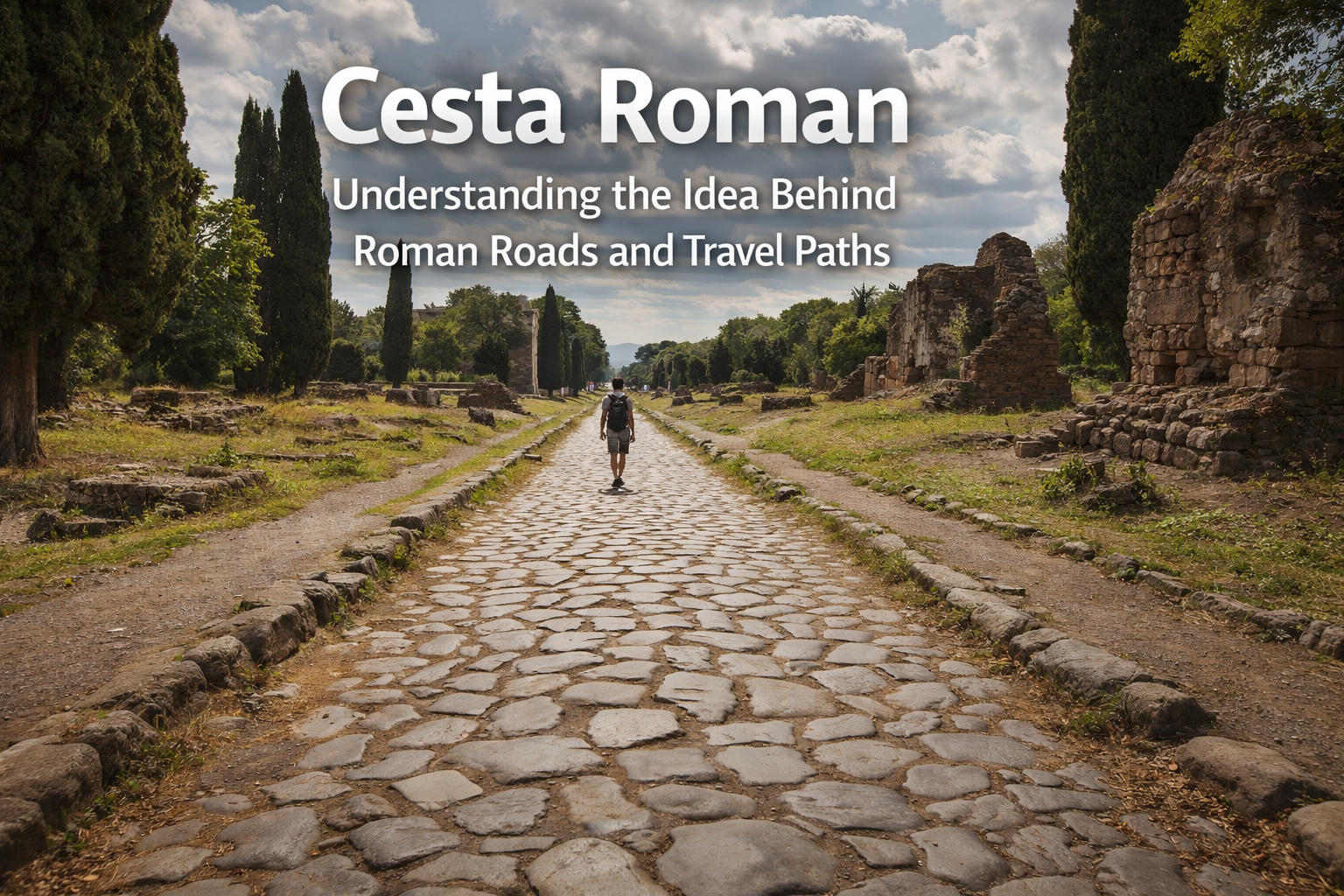
What does cesta roman mean?
The phrase cesta roman can feel a bit confusing at first. It is not a common English term, and you might not find it in everyday conversations. In simple terms, it is often linked to the idea of “Roman roads” or “Roman paths.”
The word “cesta” in some languages means “road” or “path,” while “Roman” clearly connects to ancient Rome. So when people use cesta roman, they are usually pointing toward the network of roads built by the Romans long ago.
Think of it like this: it is a way of talking about the roads that helped shape one of the strongest empires in history. Even if the phrase itself is not standard, the idea behind it is very real and important.
The history of Roman roads
To understand cesta roman, it helps to look at the world of ancient Rome. The Roman Empire existed over 2,000 years ago, and it covered a huge area across Europe, North Africa, and parts of Asia.
One of the biggest reasons Rome became so powerful was its roads. The Romans built thousands of kilometers of roads connecting cities, military bases, and trade centers.
These roads were not just dirt paths. They were carefully planned routes that helped soldiers move quickly, allowed traders to sell goods across long distances, and made communication faster than ever before.
A famous saying about these roads is that “all roads lead to Rome.” While not literally true, it shows how central the capital city was in the network.
How Roman roads were built
The construction of Roman roads was actually very advanced for its time. Even today, engineers admire their methods.
A typical Roman road was built in layers. Workers would first dig a trench and then fill it with different materials:
- Large stones at the bottom for strength
- Smaller stones and gravel in the middle
- Sand or cement-like materials to hold everything together
- Flat stones on the top for a smooth surface
This layered system made the roads strong and long-lasting. Some parts of these ancient roads still exist today, which shows how well they were made.
The Romans also tried to keep their roads as straight as possible. Instead of going around hills or forests, they often built through them. This made travel faster, even if it required more effort during construction.
Why Roman roads mattered so much
The importance of Roman roads cannot be overstated. They were one of the main reasons the Roman Empire stayed connected and powerful.
First, they helped the military. Roman soldiers could move quickly from one place to another. If there was a threat in a distant region, troops could arrive faster than any enemy expected.
Second, they supported trade. Farmers, merchants, and craftsmen used these roads to sell goods across cities. This created a strong economy inside the empire.
Third, they helped communication. Messages and news could travel between regions much faster than by sea or mountain paths.
Without these roads, the Roman Empire would have been much harder to manage. In a way, they were like the internet or highways of the ancient world.
This is why when people talk about cesta roman, they are often referring to something that represents connection, movement, and structure.
The modern relevance of cesta roman
Even though the Roman Empire no longer exists, its roads still influence us today. Many modern highways in Europe follow the same paths that Roman roads once used.
Cities that started as Roman settlements are still important today. The idea of building strong, direct routes between places continues in modern engineering.
When people think about cesta roman today, they may also use it as a symbol. It can represent:
- A journey with a clear direction
- A path built with purpose
- A connection between distant places or ideas
In some ways, it is not just about physical roads anymore. It can also represent life paths or personal journeys. People sometimes use the idea of a “Roman road” to describe something steady, structured, and long-lasting.
Even in modern culture, ancient Roman engineering is respected. It reminds us that good planning and strong foundations can last for centuries.
A simple reflection on old roads and new journeys
Looking at cesta roman as a concept helps us understand how important structure and connection are in human history. The Romans did not just build roads for travel—they built systems that helped an entire civilization grow.
What is interesting is how those ideas still feel relevant today. We still depend on roads, networks, and connections to move forward in life and society.
Sometimes, thinking about ancient roads can also give a simple life lesson: progress is easier when there is a clear path. Whether it is a real road or a personal goal, having direction makes the journey smoother.
The story behind Roman roads is not just about stones and engineering. It is about people trying to connect, trade, travel, and build something lasting. That is what makes the idea behind cesta roman still meaningful even today.