

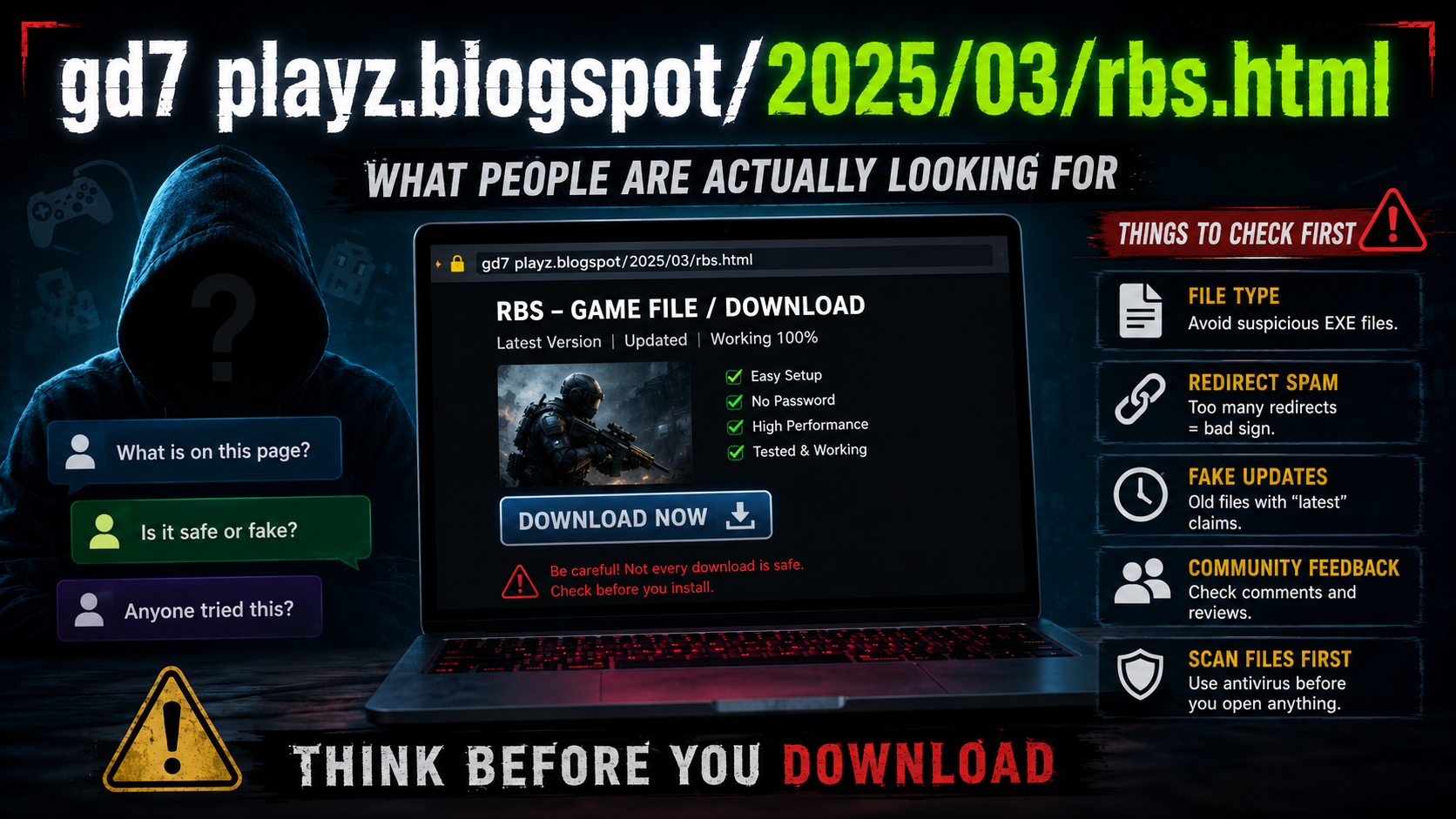
Searches like “gd7 playz.blogspot/2025/03/rbs.html” usually spread because someone shares a direct Blogspot link in a game community, comment section, or Discord server. Then the page starts bouncing around the internet faster than the original creator probably expected.
A lot of these pages are tied to gaming content. Sometimes it’s a private server setup. Sometimes a tool. Sometimes a modified game file. And sometimes it’s honestly just a basic blog page with a dramatic title that makes people curious enough to click.
The strange thing about Blogspot links is how random they look. You’ll see a URL like “gd7 playz.blogspot/2025/03/rbs.html” and immediately wonder whether it’s safe, fake, useful, or completely broken.
Most people searching for it want one answer: what exactly is on the page?
Why Blogspot gaming pages spread so quickly
Gaming communities move fast. One YouTube video can send thousands of people toward a single page overnight.
That happens a lot with small creators using free blogging platforms like Blogger. They don’t always build full websites. They just publish quick download pages, patch notes, tutorials, or game-related files.
And honestly, Blogspot became popular for that because it’s easy.
You create an account, publish a page, paste a few screenshots, add a download button, and you’re done in 20 minutes.
That simplicity created an entire corner of the internet filled with pages like “gd7 playz.blogspot/2025/03/rbs.html”.
Some disappear after a week.
Some stay online for years.
Some get copied endlessly by other blogs trying to pull traffic from search engines.
What “RBS” usually means on pages like this
The “rbs” part matters because people use that abbreviation in different ways depending on the game community.
In some circles, RBS refers to private server systems. In others, it means resource packs, battle systems, or mod menus. There isn’t one universal meaning attached to it.
That confusion is part of why pages like “gd7 playz.blogspot/2025/03/rbs.html” get searched repeatedly.
People hear about it from someone else first.
Then they search the exact URL because they don’t fully trust screenshots floating around social media.
And they probably shouldn’t.
Fake gaming download pages are everywhere now. Especially on free blogging platforms where creating new sites costs nothing.
The biggest risk with random Blogspot download pages
Here’s where people get careless.
They assume Blogspot automatically means safe because the domain belongs to Google. That’s not how it works.
The platform itself is real. The files uploaded by random users might not be.
A suspicious EXE file sitting behind a “Download Now” button can still cause problems whether it’s hosted on Blogspot or anywhere else.
That’s why experienced PC gamers usually check a few things first:
File type
If the page suddenly pushes executable files instead of normal ZIP or APK files, people get cautious fast.
Especially when the file name looks messy or auto-generated.
Redirect spam
Some pages send users through 5 ad redirects before reaching the real download.
That’s usually a bad sign.
One redirect might just mean the creator is monetizing traffic. Endless redirects normally mean the page cares more about ad revenue than users.
Fake update claims
A lot of gaming blogs pretend every file is “latest version” even when the upload is ancient.
You’ll sometimes see a page from 2023 claiming it supports a 2026 game update. That alone tells you nobody maintained the site properly.
Why exact-match URLs keep trending
There’s another reason searches like “gd7 playz.blogspot/2025/03/rbs.html” keep appearing.
People copy URLs directly from TikTok captions, YouTube descriptions, WhatsApp chats, Telegram groups, and Reddit threads without explaining what the page actually does.
So the search volume builds around the exact URL instead of the topic itself.
That creates weird search behavior.
Instead of searching:
- “RBS gaming file”
- “GD7 Playz download”
- “private server setup”
People literally search the full URL.
You see this all the time with gaming leaks, Android mods, and emulator communities.
Some Blogspot creators are legitimate
To be fair, not every gaming Blogspot page is sketchy.
A lot of small creators genuinely use free blogging tools because hosting costs money.
Especially younger creators.
You’ll find people sharing:
- Minecraft texture packs
- GTA mod menus
- Roblox private servers
- Emulator settings
- FPS unlockers
- Android patches
Some of them are completely fine.
The problem is consistency. Free blogging platforms don’t have strong quality control for gaming downloads.
So users end up guessing.
How people usually verify pages like gd7 playz.blogspot/2025/03/rbs.html
Most experienced users do quick background checks before downloading anything.
Usually something simple.
They search the creator name
If “GD7 Playz” has YouTube videos, Discord mentions, or Reddit discussions attached to it, people trust the page more.
Silence across the internet makes users suspicious.
They look for comments
Real user comments help a lot.
Even basic replies like:
- “worked for me”
- “virus detected”
- “link dead”
- “updated version here”
Those comments often tell you more than the page itself.
They scan files first
Good antivirus software catches obvious threats quickly.
And yes, people skip this step constantly. Then they wonder why their browser starts opening casino ads at 2 AM.
Gaming culture created this entire ecosystem
Back in the early YouTube gaming era, creators shared downloads through MediaFire links and tiny Blogspot pages because it was cheap and fast.
That habit never disappeared.
It just evolved.
Now you’ll see Telegram channels, Discord servers, shortened URLs, cloud storage mirrors, and Blogspot pages all stitched together into one messy chain.
“gd7 playz.blogspot/2025/03/rbs.html” fits perfectly into that internet culture.
A small page can suddenly explode in traffic because one creator mentioned it during a livestream or dropped it in a pinned comment.
Should you trust pages like this?
Depends entirely on the source.
That’s the honest answer.
Some are harmless.
Some are abandoned.
Some exist purely to push ads and questionable downloads.
If you land on a page like “gd7 playz.blogspot/2025/03/rbs.html”, slow down before clicking random buttons. Check whether the creator exists outside the page itself. Look for community feedback. Scan files before opening them.
That extra 2 minutes matters.
Because once malware lands on a PC, cleaning it up becomes a much bigger headache than verifying a download first.
And honestly, most long-time gamers learned that lesson the hard way at least once.